In Memoriam: Lee Gregson

In Memoriam: Lee Gregson

UK Racketlon is devastated to learn of the passing of Lee Gregson. Whether in the way he conducted himself on court or his efforts organising the UK Tour, Lee personified everything that makes Racketlon a great sport to play.

Based out of The Northern in Manchester, Lee quickly became a regular at events across the North as well as in our national events. On the UK Tour he claimed three titles, the Men’s B title at the 2016 Staffordshire Open (defeating son Will in the final!), and a brace of back to back Men’s C titles at the 2018 and 2019 Richard Lawrence Opens. On the World Tour Lee claimed two titles. In a Racketlon sense, the highlight would be the World Tour Mixed O45s title at the IWT Malta Open in 2019. Partnering the indomitable Esther Dubendorfer from Switzerland they won the O45s Mixed title winning every sport in their matches. However, I would assume that his personal highlight would have been winning the 2016 Men’s E Doubles title at the CHA English Open, as he was playing with his son Will. They faced Robbie Wong and Sam Wilson in the final. Three down into tennis the Father and Son due squeaked a 21-18 tennis set to require a gumi-arm. They won to claim that title. Lee, Will and gumi-arms, we’ll come back to that topic….

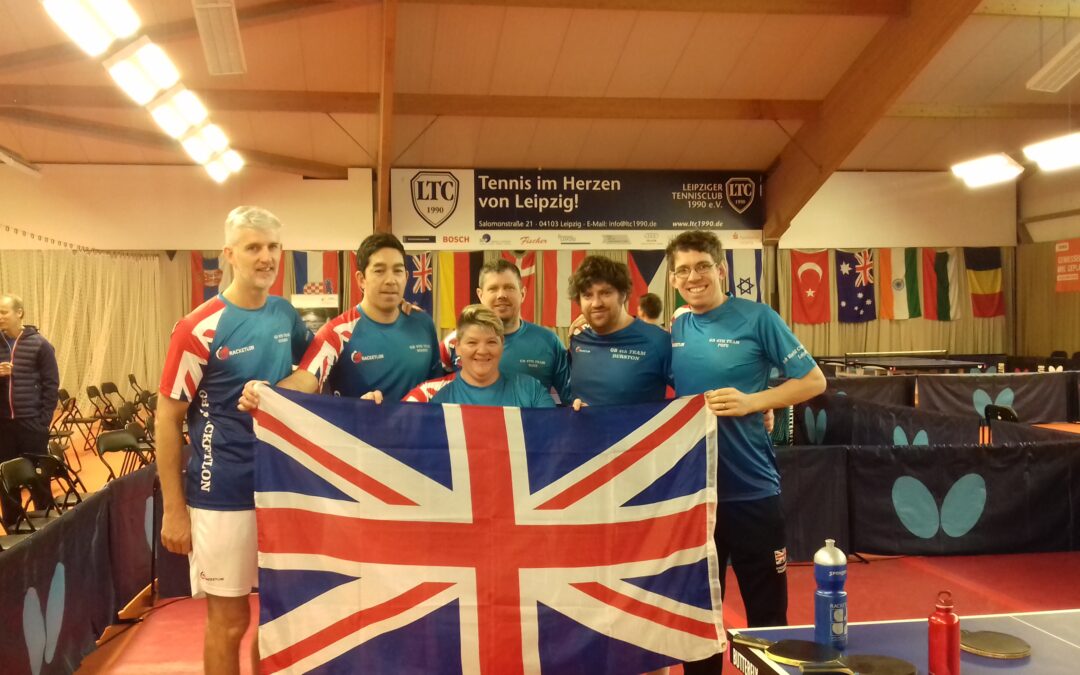
Lee was capped twice for Team GB, playing in the GB4 side in the Challenge Cup at the 2019 World Championships in Leipzig. It was a baptism of fire, debuting vs India 1 in their first international match where Lee played Adarsh Narayanaswamy at Men’s singles 2 (he did win the tennis) before helping the team secure a final standing of 5th as he teamed up with Joel Durston in the doubles rubber against India 2.

But Lee had a greater impact on the UK Racketlon community as well being a player. He ran several events at the Northern club in Manchester, usually the North West Open tantalising players with the opportunity to play grass court tennis, which were always supremely friendly tournaments as Team Gregson banded together to ensure all players had a great day. But, even if you never played at The Northern, Lee played a crucial role in all our Racketlon experiences, as he was Tour Officer between 2019 and 2023. One of the toughest jobs in Racketlon, Lee helped ensure that we were all served with a great array of events and venues up and down the country, as well as supporting new tournament directors in their journey and ensuring that the logistical challenges of equipment and barriers was always sorted.

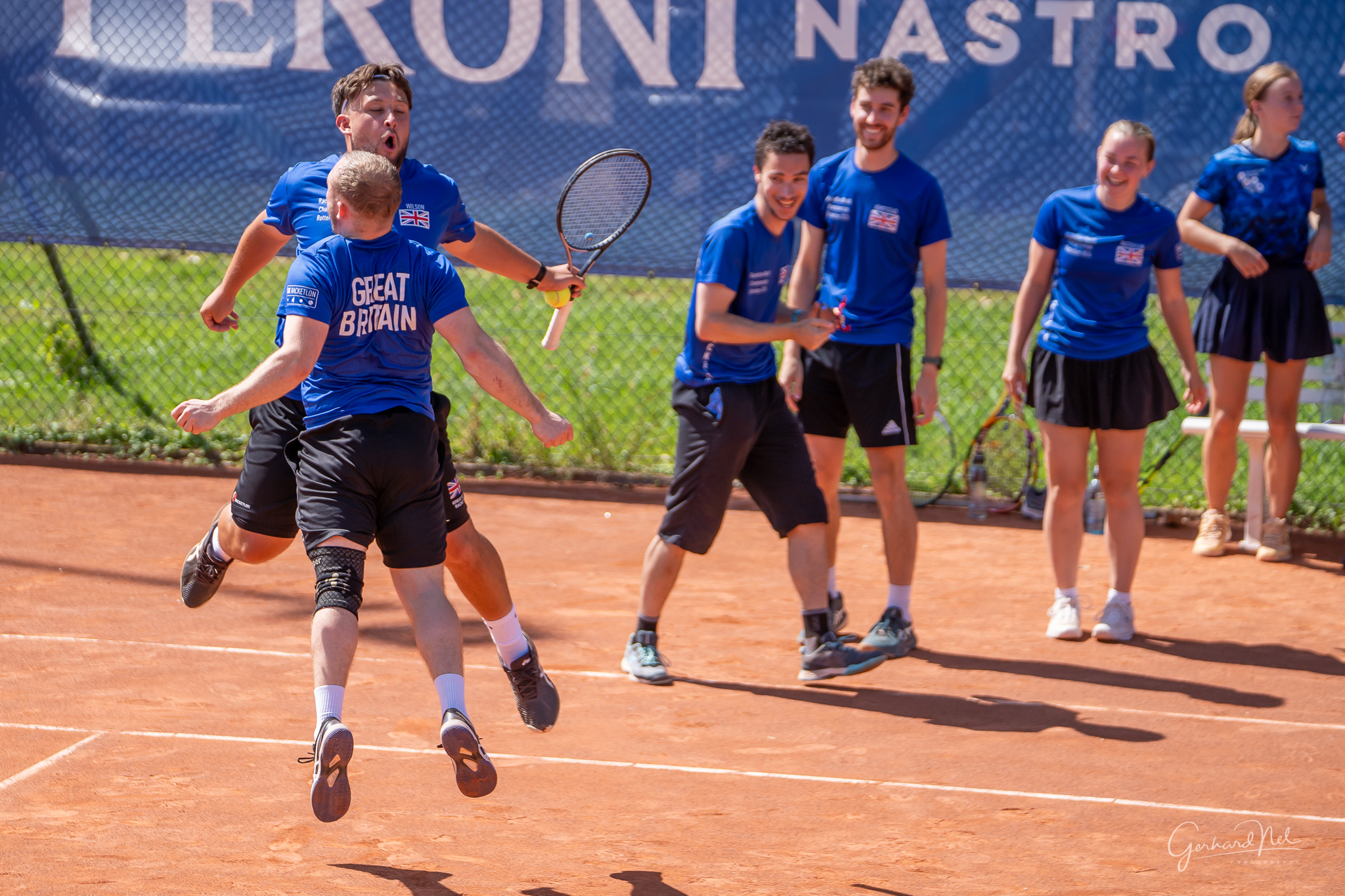
Administration, tournament direction, World Tour winner and…. dancer. Because for many of us, one day in 2017 will provide us with our abiding memory of Lee. The 2017 European Team Championships in Vienna. GB U16s 1s were in the final. With Hungary and GB U16s 2s having both beaten Austria 2, they played an effective semi-final in the last match in Group B. It was a fantastic encounter all the way as Botand Francia & Balazs Szalay faced Ross Wilson & Will Gregson. At the halfway stage the Hungarians were 17 points up, with a maximum of 66 remaining in the tie, but Ross and Will dragged it back. They were 3 down into the final doubles tennis rubber, and they came home 11-8, the tie was all square, it was a gumi-arm. Shirley Barre captured the drama for those of us back in the UK (the whole Europeans were over 10 days that year) and joy abounded in the UK and Vienna as Ross and Will won. But the real joy was captured in Lee. With a smile as wide as his face, he danced his heart out in joy at the boys performance, celebrating them in a fun and friendly way, and for UK Racketlon ‘Dancing’ Lee Gregson was born. For me it captured the essence of Lee, he was competitive yet friendly, a proper sporting gentleman, who took joy in others, from his son to all his friends in Racketlon. 


Ultimately the sport of Racketlon is built on people like Lee. They are not the superstars of the game, but they provide the infrastructure and the environment for those stars to shine and for the sport to continue growing and thriving. Lee will be greatly missed by all of us in Racketlon, both here in the UK and across the global community. Our thoughts are with Will and the rest of the Gregson family at this time. 

Written by UK Racketlon Secretary James Pope, on behalf of the UK Racketlon Community. 
Retirement Announcement – Julian Clapp

Retirement Announcement – Julian Clapp

Julian Clapp annouces his retirement after his successes at the World Championships 2026. 

James Pope reports:

UK Racketlon has learned that one of our most decorated senior players, Julian Clapp, has retired from playing Racketlon after the 2026 World Championships. He bows out on the back of winning the O70s Singles title, achieving what so very few do, to retire at the very top.

Where it all began…

Julian’s adventure in Racketlon started by happenstance, at a chance encounter at a badminton AGM where someone suggested he should play a multi-racket sport – the name of which he couldn’t remember. This was soon backed up when he bumped into a “squash guy” he hadn’t seen for 3 years and hasn’t seen since, who confirmed this unknown named sport existed. 

Julian dug into the idea and some internet searching took him to Racketlon. He entered the 2014 Richard Lawrence Open and never looked back…. No, not really, he had a somewhat torrid time. The rules seemed complicated and after his 35 year old TT bat had left him on the wrong end of a 21-1 defeat (the 1 was a net cord, but they do all count) Julian did consider feigning an injury and heading home, giving Malcolm Burr a walkover. He wouldn’t have been the first, and he wouldn’t have been the last to feel like that. However he persevered. He won the badminton, lost the squash and was defending 7 in the tennis. He fought, ran everything down and won 21-3. He lost his next match to Bruce Shepherd before a final win over Julian Kashdan-Brown took him to third place. Exhausted but over the moon, the bug was born. 

The progression…

Julian kept ticking over, and in 2015 won a first title the Men’s D at the South Eastern Open, and just a few weeks later it was the Men’s C at the Staffordshire Open – the progress was coming. He also started to gather international experience at the immensely popular (and much missed) King of Rackets event in Belgium. Local hero Hans van Daele encouraged him to think big, and so Julian did. He joined his first GB O55s squad in 2015 for the European Championships in Prague. The juniors and seniors were parked off site, but Julian, in what he describes as “A team of four better players and me”, said it was fine. The O55s won gold and with that, Julian was a team European Champion. International seniors was where Julian began to really focus, becoming the O60s champion at the Super World Tour Racket Masters event in 2016, and at the 2017 European Championships, with partner Graham King from Switzerland, they were crowned the Men’s O60s doubles champions.

The World Championships…

Julian was beginning to progress nicely and the move up an age group in 2019 led to a fresh drive to push on. Alas, as he started to get into good nick, Covid came and shut it all down. Julian took the challenge in his stride and at the 2021 World Championships he found himself in the +65 singles final. He faced Stefan Blomgren. Julian wished to get to tennis, and his 5 point lead after squash achieved that aim. He took it deep, he asked questions that his opponent wasn’t answering very well. Julian got the score to 17-17 and that was enough – his first singles World Title! It wasn’t his last. He defended that singles title the next season, plus two more O65s Doubles titles with Graham King in 2022 and 2023. There wasn’t much left to win, but Julian sealed his first British National Title in the O65s singles in 2024, before completing the set of O65s titles with the 2025 O65s World Teams title. 

Making history in 2026…

As well as that O70s singles world title Julian made two lots of history in Rotterdam in 2026. Firstly, he was part of the GB team who won the first O70s World Team title before being part of the historic GB O65s Team Podium lockout, as GB O65s 1s won that final, defended their title and finishing in the greatest possible way. As Julian put it, he realised in the shower afterwards that he was done. 

Julian’s closing thoughts…

“It’s been such fun, the players, the matches, the ups and the downs, what a community. At 50 most players are winding down, Racketlon gave me new goals and even at 70 I still wanted to get better. If you had said to me in Oxford, as I considered feigning the injury and going home that I would win 10 World and European titles, I would have suggested you were not feeling very well. It really shows you should persevere in life. However now, there are other goals to chase,”

Congratulations to Julian on a fantastic Racketlon career, and a stunning set of achievements. Good luck in chasing these new goals and if they are competitive, then your future opponents had better watch out!  

World Champs 2026 – GB5’s Satellite Cup Victory

World Champs 2026 – GB5’s Satellite Cup Victory

Credit to Gerhart Nel for the wonderful photographs throughout. 

Racketlon World Championships 2026

Joel Durston reports on GB5’s route to victory in the inaugural Satellite Cup!

Our Great Britain 5th team claimed their first title, the inaugural Satellite Cup, and in doing so helped Great Britain stake claim to the record of having won all of the various elite and senior categories at the World Team Championships!

Despite the great strength in depth of UK Racketlon, it was only three years ago it was decided that Great Britain would expand to bring five open age teams. (France, brilliant rivals across many categories, Teams and Singles, brought a whopping nine open age teams this year!)

The Satellite Cup was created due to the increasing popularity and quality of the World Championships Teams events – with 13 teams in the Satellite this year and eight in the Challenge Cup there was a record 21 teams other than the World Cup and Nations Cup this year. These 13 teams, including GB5, battled it out in a monrad draw to be the first to etch their country’s name on the trophy.

The Captain

GB5 Captain Sam Barker says:

“I could not be more proud of the team. Every single person not only played brilliantly, but supported their teammates superbly. There was a really unique energy and resilience that ran through the team all weekend, culminating in Ian’s sensational tennis comeback in the final. We’ll always be able to say we are the first ever winners of the Satellite Cup – and it was thoroughly deserved! A weekend I’ll never forget”. 


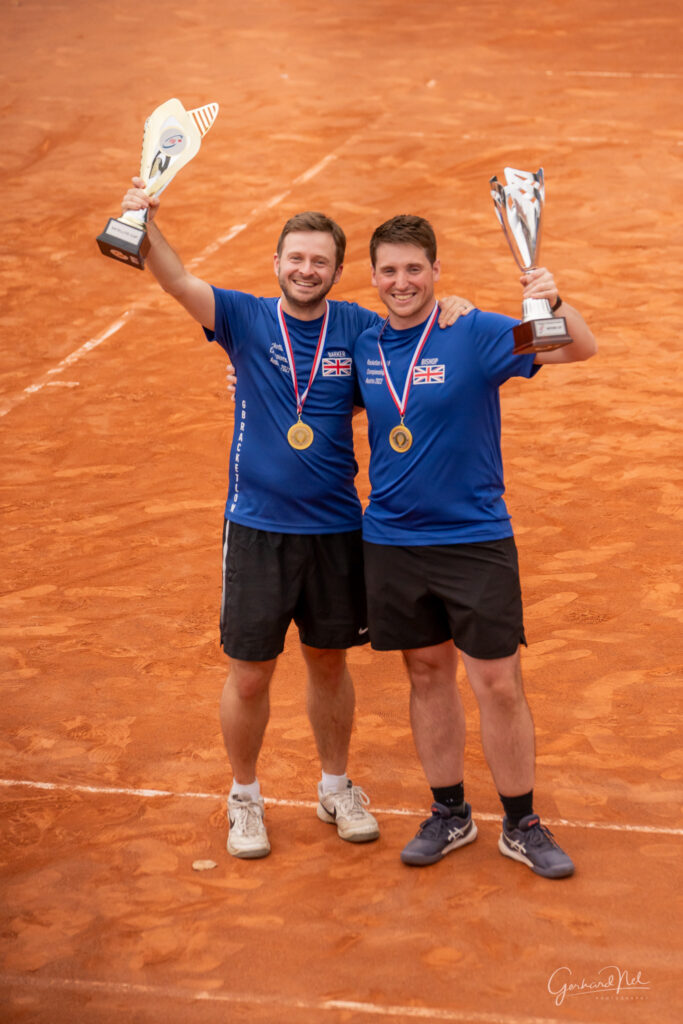
GB5 Captain Sam Barker with GB2 Nation's Cup Winner's captain Jack Bishop

The Team

The 5th team had an excellent line up with Sam Barker as captain, Ishan Bairoliya, Kayleigh Chapman, Joel Durston, Ian Johnston, and Cam Leighton. Sam, Ian, Ishan, and Joel were the top four in the B category of the British Championships this year, in that order. Meanwhile, Kayleigh was a finalist in the Women’s B, as well as a player in the 5th team last year, and Cam brought a good deal of UK and international experience to the team.

Our 5s enjoyed a bye as second seeds then cruised to victory in the quarter final over Germany 5, the only other team apart from the two seeds to get a bye, with the impressive record of not dropping a set across all 12 played. The match finished comfortably before tennis. In fact, arguably the most tricky thing about the match was a good five minutes debating if the men’s doubles score was 10-8 or 9-7 (to GB). Germany finally conceded it was 10-8 – a good lesson to always say the score out loud! 

Then things got serious. In the semi-final, we played Hong Kong 2, who had dominated both France 6 then France 8. In the first match, the team had lined up with Ishan on first singles, Ian on second, and Cam and Joel on doubles – and it was not broke, so they did not fix it. The same lineup remained for the final too, as Sam Barker’s knee was heavily strapped and he nobly decided not to risk playing himself. Instead he was captain extraordinaire, doing tons of research on the opponents, imparting good half-time feedback, giving moral support, and even providing refreshments.

Hong Kong are traditionally very strong in the first half of racketlon matches so GB5 did very well to only be four points down at halfway. There were a few big TT wins. An 11-5 score for Joel Durston and Cam Leighton in doubles against Ka Chun Lau and Anson Ng – a score that could have easily been the same the other way – and Ian Johnston, who has played the World Championships in ping pong (hardbat table tennis like on Marty Supreme), beat Sing Siu Lam 11-7. A strong squash saw them five points up going tennis. Ishan Bairoliya played a solid set and won 11-5 and Kayleigh Chapman played a remarkably controlled tennis set to win 11-1. She said she imagined the match as playing against her nine-year-old, moving him around with control and a lot of slice. This left Joel and Cam needing just two, which they got on the third point to get through to the final. 

GB5 vs France 5 - The Final of the Inaugural Satellite Cup

The Final

In the final we met France 5, who led the charge of a whopping five French teams in this category – 5 to 9 (the 7s, 8s, and 9s finished 5th, 6th, and 7th respectively (credit to the selectors!), while France 6 finished 13th. France 5 had beaten USA 2 comfortably, France 7s by 12, and the top seeds Finland 2 in the semi-final, by 20.

France started out ominously strong. It is not often Ishan is beaten at table tennis but he simply came up against a better player (slightly) in Thomas Lauféron, who won 11-7, while Kayleigh got five against Magali Viaud, who could stay in the rallies a bit longer. Joel and Cam made a great comeback from 9-4 and then 10-7 down to win their set 12-10. Cam has an incredible ability to analyse and then read table tennis rallies a few shots ahead, like great chess players foreseeing chess games moves ahead, and was great at relaying this to Joel, which helped the comeback.They also got the benefit of a lucky back-table edge on a return from Joel to make it 10-9. So a 12-10 win instead of a 11-8 loss, in a match won a gummi – as the cliche goes, sport is often about fine margins! (Mind, you could say karma came later with a suspect squash call.) Ian made short work of Antoine Taramasco, not a bad player by any means, 11-1.

In badminton, Ishan was at 3-3 but then used his experience, finding the right percentage plays, to take the next eight in a row. Kayleigh scrapped hard for eight. Joel and Cam got six, which was ok overall, but good from the position of 8 2 down. Ian fought hard and was ‘in’ many rallies, but, ultimately, was frankly outclassed by his opponent, 11-1, giving France an eight-point half-time lead.

Strangely for international racketlon, Great Britain were not favourites for the squash. It was neither Ishan’s nor Thomas’ strongest discipline by any means, but nevertheless – or indeed because of that – was a ding-dong battle that ended 11-8 in the Frenchman’s favour. Magali, clearly a quite experienced squash player, had too much guile for Kayleigh, and won 11-1. Joel and Cam, though, are strong squash players – and their opponents were not very strong. In fact, Joel had beaten Gaël Gautier 21-0 in a friendly match two days before. On just the third point, Gaël played an average drop shot and moved into Joel’s line. Joel read it but was given a no let, which he thought was very harsh but he made no mistake with the rest and nor did Cam, for a 11-1 win. Ian’s squash set was very attritional, between two very equal players. He actually led 8-5 but Antoine recovered to win 11-8.

All this meant France extended their lead to 14 lead going into tennis. So, advantage France. Great Britain has some strong tennis players but it was a lot of scoreboard pressure – realistically, wins needed from all four. Captain Sam Barker said “11-7 from everyone. We are good players. No problem!” With, needless to say, tongue largely in cheek. But that’s exactly what they did!

Ishan’s opponent Thomas was a pretty strong player, but Ishan was very solid. Perfect tennis for racketlon (we are not saying ‘racketlon tennis’!). There were a lot of long rallies, which Ishan mostly got the better of, a few times as Thomas hit closer and closer to lines and then missed and a few times clever play from Ishan moving his opponent front and back. Setpoint, for example, was a clean dropshot winner. Kayleigh did the same, with some great tennis against a solid opponent, and Cam and Joel won 11-8.

This meant France’s Antoine Taramasco needed nine for the win and eight for the gummi. It was, like the squash between the two, 50/50. The Frenchman was 8-7 up, with four matchpoints. Ian held his nerve through some tense, long rallies to bring up a gummi. Antoine won the toss and put Ian in to serve. Ian served, and Antoine hit it on the run and rushed the net…but put it a bit long, to the delight of our Brits – watch the final point here! https://www.facebook.com/reel/1363949792081639

After the wild celebrations, everyone was saying what a hero Ian was and how we could not imagine playing that! Remarkably, he said he was happier having played it, as he had control over the proceedings, rather than watching it! 

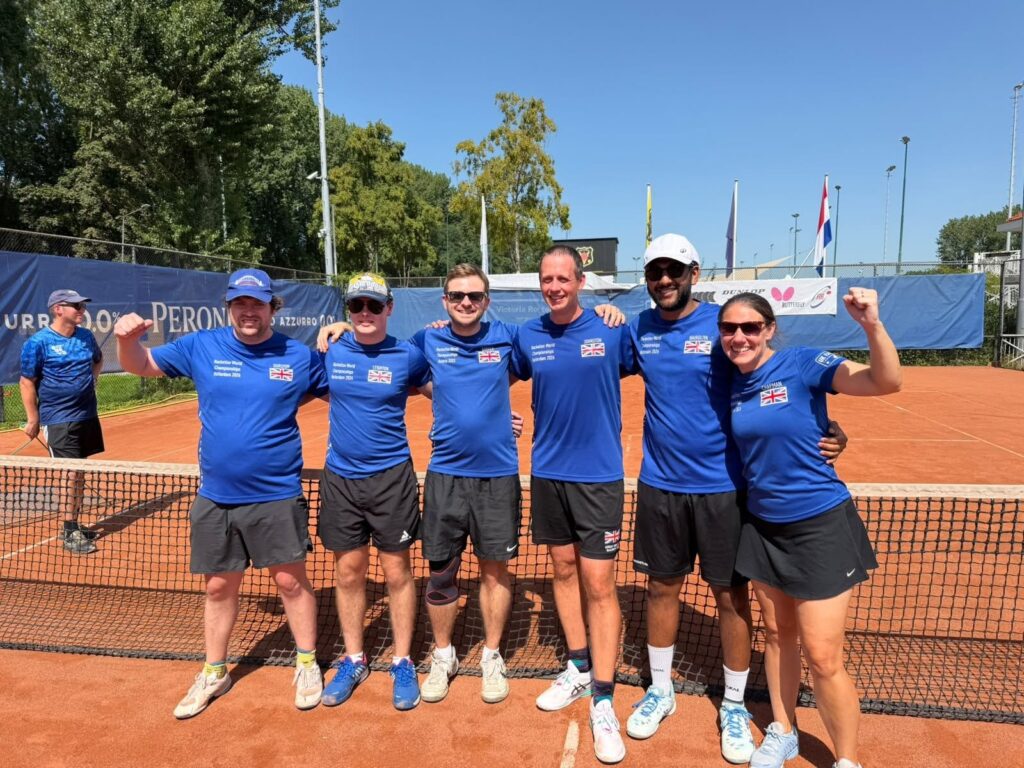
GB5 on the podium!

Reporter and GB5 player, Joel Durston

Satelitte Cup Winners 2026

World Champs 2026 – Jack Bishop on his 4 World Champs Roles

World Champs 2026 – Jack Bishop on his 4 World Champs Roles

Credit to Gerhart Nel for the wonderful photographs throughout. 

Racketlon World Championships 2026

Delegate, selector, player and captain – Jack Bishop takes us through the many different roles he takes on for the Racketlon World Championships…

Four. Four sports. Four years in Rotterdam. Four different hats I wore. Let’s explore.

GB Selector

It is a privilege (and a big responsibility) to be part of the GB selection panel. This is my third year and I feel that Tilda, Pete and I almost have the process down to a fine art, but it doesn’t make the decisions any easier! A lot of healthy discussion, and from our medal haul, I feel like we made the right decisions. I was particularly pleased with our decision to send as many +65s teams as we could, vindicated by our podium lock out. Thankfully pretty much all of our work here is done pre-event.


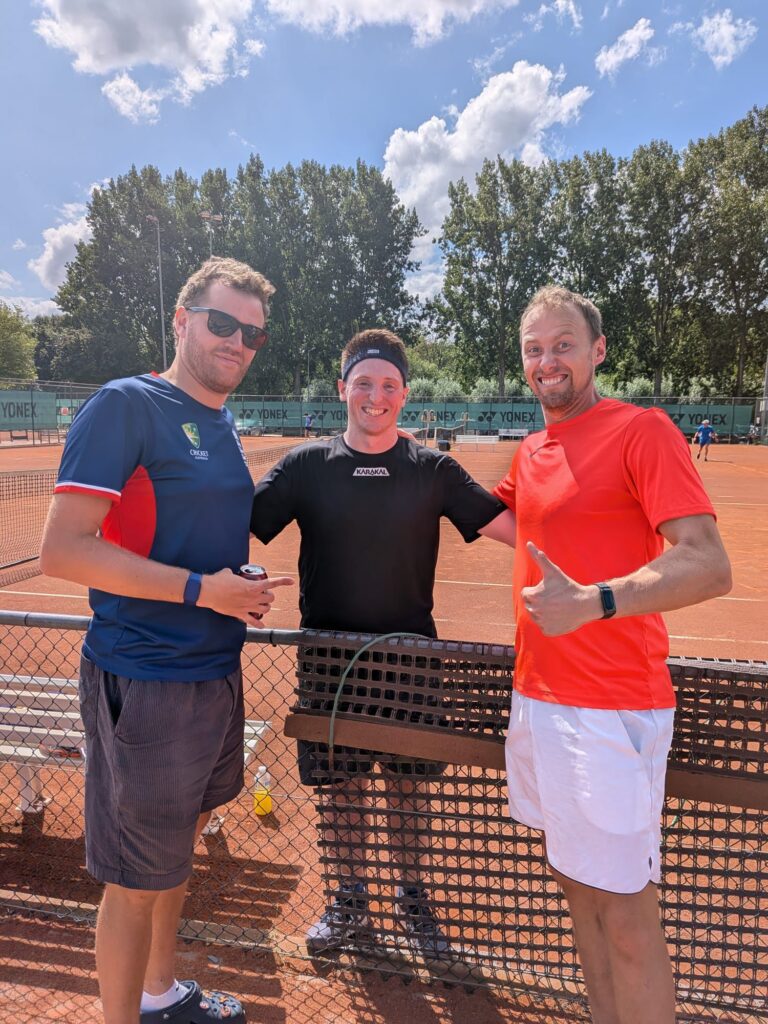
One of many long selection panel meetings...

Player

Day one for me was personally focussed as I began my Men’s B grade campaign. Inadvertently I heaped a lot more pressure upon myself for my first match after revealing pre-tournament that I’d never won a World Champs singles match in any form – 18 matches in 6 WCs spanning 12 years. Not that I was counting…I also got a full appreciation of how many people follow our social media as a lot of people mentioned it to me prior, and not just Brits! What followed was a match that pretty much summed everything up about Racketlon.

My opponent was Frenchman David Chelly. I knew the name but had never met him, and naturally I went deep into the data and his matches to get a sense of his profile; TT, tennis, squash, badminton. My plan was – lose as best I could in TT, follow it up with a must-win badminton, reverse the TT in the squash and then need about 16-18 in tennis – my racketlon career in a sentence! And it played out that way, kind of…

  • Table tennis – an absolute GRIND to lose 21-8. Every point meant so much as I battled a crafty, left-hander with pimples. Thank you Keith ‘Quiche’ Lesser for responding to my ask for some half-time advice, especially when I simply said “Help, Keith, I literally don’t know what to do against these pimples”.
  • Badminton – both our worst sports – and it was as pretty as you imagined. I knew it was key. And I was nervous. My short serves were about a foot over the net. Yet somehow I recorded my best badminton singles win on the tour since the Czech Open 2018. At this point I had (stupidly) got ahead of myself and thought this was mine for the taking.
  • Squash – and the mentality changed again. Squash – the one I had been playing a lot of. Feeling confident. And suddenly I was in a battle. This guy was tricky…I’m not sure where his shots were going to go and some of the nicks he hit were outrageous. At about 8-7 up I’d  given away as many as I had hoped for the whole set. Mentally I reset, and I fought hard for a 21-9 win.
  • Tennis – traditionally my second sport – but by god I hate playing on proper clay (probably my own fault for not buying clay shoes after 4 years in this venue!) I needed 11, and against most players I come up against I would be very confident in achieving that. But I have a history against TT-Tennis profiles. Markus Kugel. Marco Genzel. Yves Bret. Ghosts of the past. And within precisely one point I knew I was a bit in trouble. Crafty kick. High kicking forehands. I barely put up a fight before getting involved in the dreaded ‘Racketlon Tennis’. At 4-11 down at the turn I turned to Messrs Bispham and Langworthy (pictured below) – “I don’t know what to do, my head is scrambled”. However much my head said “hit topspins” I just couldn’t do it and remember telling myself “Well you’re gonna have to grind this one out. And somehow I did – 11-17. It was ugly as heck. A travesty to all past tennis coaches I’ve had. But that’s the 5th sport of Racketlon. The mental grind of every point. And why we love and hate Racketlon so much at times in equal measure.

Amongst all this – my opponent, David, was genuinely one of the nicest people I’ve met through Racketlon. A match played in the perfect spirit. Applauding each other’s great shots. Apologising for the lucky ones. And genuine conversation between sets, this match really did have it all. And I wouldn’t want my first win any other way. I promptly lost my second match, nearly getting bagelled at TT and losing the decisive badminton set – but I couldn’t be angry given I’d practised once pre-event…you get what you put in!


The relief of winning my first ever singles match at the World Champs!

Delegate

Days two and three (and lots of the weeks prior) was dominated by Delegate mode – joining the unbelievable tournament volunteer team behind the desk. I am so pleased they got deserved limelight on the podium with special (chopping board) plaques as the effort that goes in behind the scenes is the reason the World Champs the last 4 years have been as good as they are. I have been a delegate at tournaments for over 10 years now – originally it was a means to keep my costs down but now I do it for the enjoyment of being part of a Dream Team once a year. It’s hard work but incredibly rewarding. Too many names to name, but you know who you are!

So, what do I actually do as a delegate? The majority is about draws and schedules. Over 1,000 matches, 400+ players. Trying as best we can to ensure 3 matches minimum for all. And the bane of my life – handling walkovers and byes! A plea for all – please only pull out of matches as a last resort!! And then there will always be some pesky ‘rule’ decisions to be made – thankfully there weren’t really any major ones this year. One that tickled me was a certain G.King and J.Clapp, two relatively (VERY) experienced players managing to finish their match only to realise it was actually tied. It took over 24hrs for the match to actually be finished with a modified Gummi-arm, which I allowed. I also enjoyed someone asking if their child could play two teams matches. At the same time. Despite the matches being on different sports throughout. Naturally, the answer was ‘NO’!

Any late teen or 20-something player – I fully encourage you to consider becoming a delegate. It has taught me a lot about tournament organising, decision making and handling difficult situations. And it helps keep your costs down. If interested, shoot me a message!

Captain

And finally, on days four and five of the World Championships, my head turned to Captaincy. I had the privilege of captaining GB2, a team rich in history. 5x winners of the Nations Cup. But never without its fearless leader Alex Du Noyer. And personally I had only won it once, in Zurich 2018, in one of the greatest Racketlon matches I’ve been part of. 

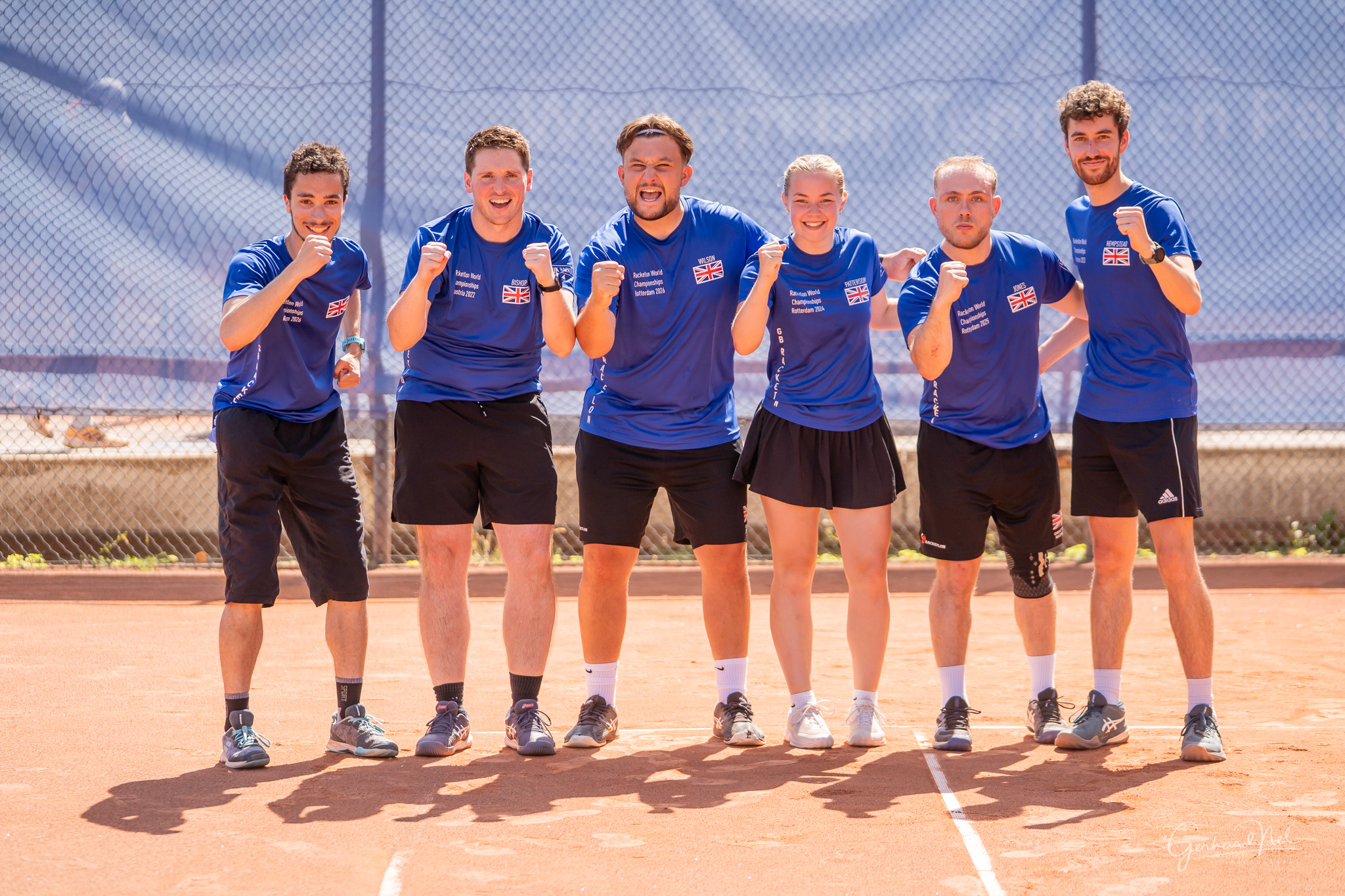
We had compiled an unbelievable squad (+ myself) – Hempstead. Jones. Patterson. Watkin-Rees. Wilson. All in great form in the singles. And even though we had some tired bodies and niggles, and no pre-existing doubles pairings, I knew deep down we were the favourites. Not that I was admitting that to anyone!

So what does a captain think about? Well if you’re me, you overthink! You want to give everyone game time / allow rests where needed, but you also can’t afford any slip ups. You want to test different doubles pairings but also IF you do have a final you want it to be a settled pair. And of course, you second guess what your opponents may do!

Our first match was against Denmark 2s, the Challenge Cup runners up in 2025. They had a team including Women’s B champion Deleuran and Men’s 55+ champion Steinmetz, and knew they would be strong in badminton in particular. When we won that sport +10 I knew we were in a good place and won the match +62. Next up was Germany 2s, the winners in 2024. I dwelled a lot on selection before sending Jamie to play against their TT gun (thankfully Jamie is a Bad-Squ gun dropping only 4 points) and then forming what turned out to be a masterstroke doubles pairing of Jones & Wilson. We won +38 with everyone winning their individual matches. What was left was what was going to be the closest group game versus Hong Kong, the winners in 2023. And this was my first big call. The ‘fairness’ call involved rotating me into the team. The sensible decision was keeping the same team. We all had the same goal. And we went with the latter decision. A +37 win later and we were in the final. Against the new (auld) enemy France 2s.

We had beaten them in the final handedly last year, but their team this year included a much improved Anais Ben Mansour – the newly crowned Women’s Elite singles champion! I contemplated a bit but I now had a new ethos: “don’t second guess their team, put our best team out and let them beat us”. So out went the same team. Little did I know how much of a nervy supporter I was! As Jamie conducted a push battle against Anti-Spin I could barely watch (see picture below). But what a performance from the whole team as we won +20.

Highlights:

Jamie – winning 11-2 at squash and then winning 5 in a row from 7-10 down in tennis. Iconic.

Mollie – outlandish TT against the World Champ and 7 incredibly valuable tennis points.

Henry – steadying the ship in the 2nd half of badminton to win a 50/50 set in the algorithm.

Ross – raw passion on the squash court against the French Captain. The roar is still ringing in my ears.

Hempstead – the cheat code at #2. 9 matches. 9 wins. I hope you’re recovering somewhere.


And yes, it was very enjoyable to win with a lot of pride. But what I loved more was the camaraderie and support. We had a travelling army of family from two thirds of the squad – thank you. And our team WhatsApp chat is a genuine joy. A lot of the time Racketlon is an individual sport but not Teams. I loved bringing together this group of 20-somethings (giving a good 10 years to all), a range of personalities who all kind of knew each other and us coming together as a team, creating closer friendships. And more than anything, having a great laugh.

Racketlon will always have my heart. See you in Helsinki, where if I’m honest, I’d like to be wearing fewer hats!

The stress of being a captain and spectating!

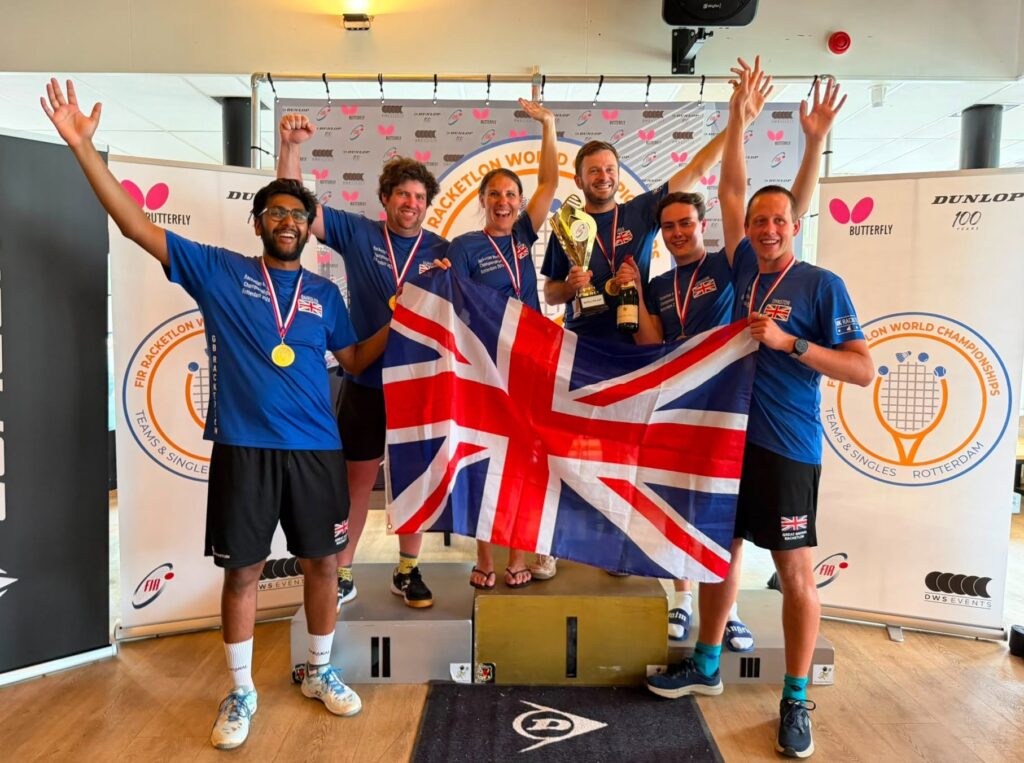
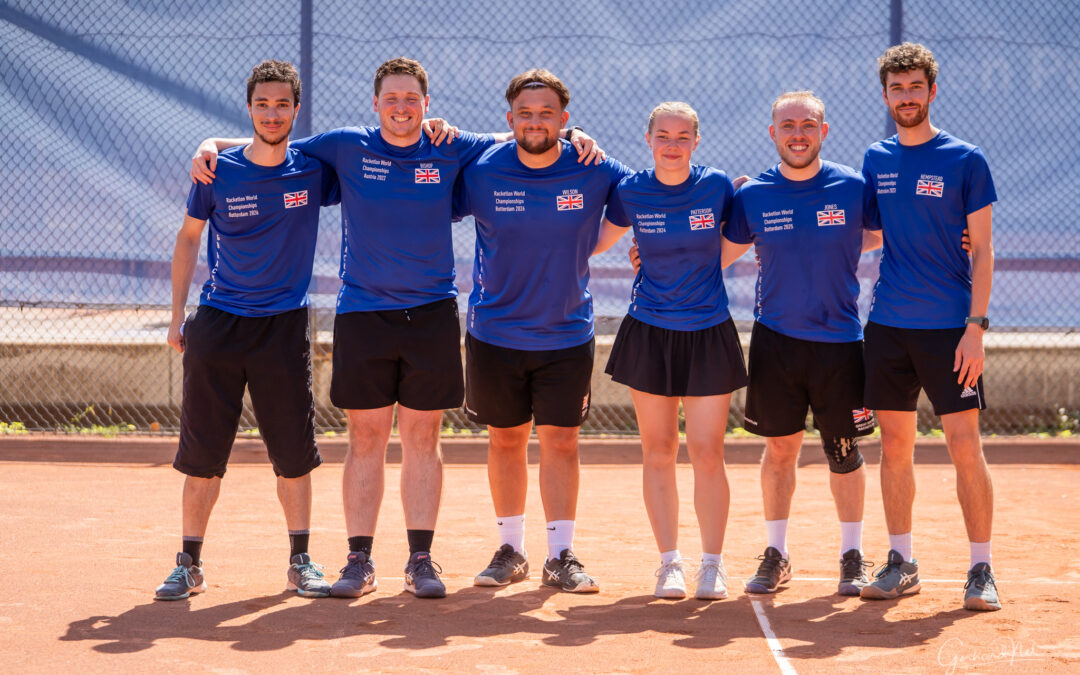
GB2 Celebrating the Nations Cup win!

Nations Cup Winners 2026

World Champs 2026 – Thoughts and Reports!

World Champs 2026 – Thoughts and Reports!

Credit to Gerhart Nel for the wonderful photographs. 

Racketlon World Championships 2026 – some thoughts and reports!

Matilda Parslow, GB Captain of Selectors, reports:

What an incredible World Championships – both the singles and the team events produced a huge number of medallists and newly crowned GB world champions!

Once again, GB tops the medal table for the elite open and age categories. Although we were closely contested by the French, GB held on in multiple categories to once again show that we are the leading Racketlon nation. 

Gold medals in the inaugural +70s team championship and Satellite Cup (open division 4), GB retains its incredible status of having won every single seniors and open category possible at the World Team Championships over the years. Just wow!

I would like to quickly say a huge thank you to the other members of the selection committee, Jack Bishop and Peter Barton, for all their hard work leading up to the event. I would also like to thank every captain who has taken on the (difficult, and sometimes stressful!) responsibility of organising their team and deciding the lineups. Well done! Finally, thank you to everyone who has supported the players, come out to watch, and generally made the racketlon community a wonderful thing to be part of. 

Instead of a straightforward review of all the winners and categories, of which there are many, (check out our social media for all of the podium photos!) we present a variety of thoughts and reports from across the GB racketlon community. 


Tylor Li, GB U14 singles silver medallist, reports on his week at the Racketlon World Championships:

I walked off the court in Rotterdam with a silver medal hanging around my neck, and honestly, it still feels a bit surreal. I even joked I wanted to sleep with the medal because I honestly couldn’t have dreamed of this before the tournament started. Last year I was down in 17th place in U14, and since I’m only turning 13 this month, playing against kids who are not just older, but much taller than me made the whole thing feel pretty crazy.


People always say Racketlon is the ultimate test, and they aren’t wrong. You can’t just be good at one thing. If you spend all your time practicing just one sport, the other three will catch you out. It’s this brutal mix where you go from having lightning-fast reflexes at the table tennis table to exploding around the badminton court, and then straight into the lung-burning, suffocating nightmare of squash. By the time you finally step onto the tennis court, your legs are completely dead. Trying to switch your brain, your grip, and your muscle memory between four totally different rackets while you’re completely exhausted is the hardest part of the whole thing.


The absolute toughest part of the week for me was the U14 semifinal against Karl Robert Toomjõe from Estonia, who had just beaten the current British U14 Champion. It was the tightest match ever (21-23, 24-22, 21-17, 18-12,with a win of +10). I narrowly dropped the table tennis 21-23, and then my string broke right in the middle of badminton. After changing my racket, I managed to fight back and win 24-22. Squash was the massive turning point because he had crushed me 21-6 the night before (in the U16 draw, in a match I lost), so I had to completely change my strategy. I played really well, and just after the middle break at 11, while leading a close game, I took a brutal fall and banged up my knee and hip. Some people in the crowd were yelling at me to just quit, but I pushed through the pain, won the squash set, and held my nerve in tennis to secure the overall win. 


My luck appeared to end in the U12 World Singles final where I played Baptiste Pothier from France, the defending silver medalist for U12 last year. He is extremely talented at table tennis, completely wiping me out 21-3. Perhaps I could have achieved a few more points in badminton if not for my leg but no. He was very good and congratulations to him on a well deserved gold medal.


All year it’s been non-stop grinding. I’ve been running between different clubs, doing double sessions, and trying to build enough stamina just to survive the draw. To have all that split-training actually pay off on the world stage feels pretty awesome. If this week taught me anything, it’s that when you get knocked down, you just have to get right back up and never give up. Playing against guys way taller than me proved that you just have to believe in yourself—because short people can win too.


Now that I’ve tasted silver, my focus has completely shifted. The training for gold next year starts right now!


U14 2 - Tylor Li and Joseph Fitches

Tylor Li

U12, U14 and U16 junior team players

Parent Perspective: Jim Fontanelli, dad of 3 racketlon junior superstars (and player in his own right!) tells us about what being a racketlon parent feels like…

Being a racketlon parent has certain requirements. You need to have a deep and abiding love of sports halls. If they are humid and slightly smelly, all the better. You need to know where the nearest source of bananas is at any time of the day in any location in any country. You need to be able to survive on an entirely carbohydrate based diet (possibly for days on end). You need to be able to show some level of interest in interminable discussions around strings and rubbers. You need to be able to deal with stress levels that are materially higher watching a game than if you were playing. You need to explain that always going into squash and tennis down is how proper racketlon should be played. You need to be able to restrain yourself from calling in the GB racketlon rendition team to deal with the Frenchman with the megaphone. And if you can clone yourself to watch three matches playing at the same time then you can avoid a sticky conversation about who is your favourite child. 


But if you can tick those boxes the payoff is huge. The term “racketlon family” absolutely rings true. Mutual support through the trials, tribulations and successes of competitive sport. It starts with explanations about what the hell is going on – four sports against the same person? It progresses through the more obscure; gummi arm – some medical complication from carrying a bag with too many racquets in it? But it ends with seeing your child being absorbed into a broader community that is always welcoming. There is the direct community – familiar faces, encouraging nods, a quiet word on some point of technique or strategy, louder support as the stakes become bigger. But there is also the indirect community, as you find friends in sports you otherwise would not have given time to – for us that has been table tennis and finding a local club that has become a central part of our week, which would never have happened without racketlon. 


On the junior side there is also seeing the kids grow up  – catching up a few times a year at tournaments and the progression through the various age categories marking out important transitions in the outside world, with GCSEs, A-levels, university and beyond. It also seems to be some weird side effect of racketlon that the kids – whilst fiercely competitive – all seem to get along really well once the final point has been played, a trait which extends to the international competitions and results in a broad network of like-minded kids across a swathe of countries who meet up and catch up in random cities dictated by the FIR. 


Then there are the Teams events at the World Champs and getting a chance to play individual sports with your peers as part of a team for your country – the highlight of the year and an opportunity that motivates practise through the dreary winter months. Bringing together multiple racquet sports in one event gives a chance for a sports-mad junior to extend skills beyond their favourite sport – making the most of your strengths as well as working on your weaknesses. There are levels for everyone and starting out is easy – just pitch up to a tournament and if in doubt talk to the nearest person and soon enough you and your child will be absorbed into a niche, but fast-growing sport that offers a lifetime of competition, from the U12’s to the 70+ category – just about enough time to figure out badminton!

Raif, Skye and River Fontanelli

Raif as part of the U21 Team - World Champions!

Skye receiving advice from brother Raif! (with Jim in the background)

Senior report from Keith Lesser, captain of the +45 team, as he reports on their route to victory!

GB retained the +45 Team World Championship title, with stalwarts Peter Barton and Jon Foulds joined by “youngsters” Ray Jordan, Keith Lesser, Alice Flatman and debutant Gavin Stephenson — and what a signing he proved to be!

The team event followed a gruelling eight singles matches, and the first team tie against France looked like a particularly tough ask. Two of their players were unknown surprises who had reached the singles semi-finals just days earlier. Benoit Pothier had knocked out the much-fancied Dane Anders Fyrst across three sports, losing only in squash, while Hervé Tixier, who went on to take bronze, had beaten not only the Czech number three seed Rostislav Kniezek — including a scary 21–12 win in tennis — but also our own Gav.

Gav got his revenge in the team event, securing an important table tennis victory before winning heavily in squash. Ray Jordan and Jon Foulds couldn’t quite overcome the power of Benoit and Guicherd, although they did secure a hugely important squash set. 

Lesser had defeated Yves Bret +36 in the singles quarter-final before tennis, but the team match-up was much more evenly balanced. Fortunately for GB, Cassier was competing in the +40 category for the team event, making the +45 team’s chances slightly easier. Cassier had also narrowly defeated Ray Jordan in the +45s singles quarter-final, with the match going all the way to 18–18 in tennis.

On the women’s side, Alice Flatman had taken silver and bronze in the +40 and +45 singles respectively, narrowly missing out on repeating her gold from last year. However, she was determined to make amends in the team event. Against Stéphanie Bret, Alice won the first three sports and ultimately secured the gold medal for GB.

After overcoming France, GB made relatively light work of Germany and India. By this stage, however, the inevitable toll of the tournament was starting to show, with some sore muscles throughout the team, and, in the case of Mr Foulds, a very sore back! Peter Barton stepped up against India to carry us comfortably over the line.

Then came the Netherlands and, with the gold medal within touching distance, it was party time!

Flatman once again faced a tough match against Dutch opponent Kirsten Kaptein, while Stephenson continued to prove exactly why his debut signing had been such a good one. He systematically dismantled former elite player Alwin Krist across three sports, including Alwin’s strongest discipline, squash.

Lesser then had to dig deep against tour favourite Guus van der Burgt, winning the first three sports and producing some immense squash in the process.

It was a hard-fought journey, with France providing a formidable early challenge and plenty of hurdles along the way. But the GB +45 team overcame them all to successfully defend their World Championship title – back-to-back gold for the +45s!


GB +45 Team - World Champions!

GB +45 Team

Alice Flatman - +40s silver and +45s bronze

Keith Lesser - +45s silver